A Debate Between a Courtesan and a Ruler
The Ruler:
Tell me, woman, who is responsible for your pain?
Who seeks the dreams that you have lost in vain?
Why have you turned your home into a marketplace?
Why have you put your dignity on public display?
Who has the right to question your character and blame?
Tell me, in this tale of sorrow, who deserves the shame?
The Courtesan:
My lord, have you ever seen a human fight with hunger?
Have you seen a mother suffer for the children she loves?
If she loses her peace just to bring home bread, who is to blame?
If life leaves her helpless, must she alone bear the shame?
The Ruler:
But you have traded your dignity away,
And made yourself a spectacle for all to see today!
The Courtesan:
You come to my doorstep with your wealth in hand,
And wear a mask of honor that few understand.
Who are you to judge my character and condemn?
Tell me, who should feel ashamed when you enter my den?
Hunger made me bury the dreams I once held dear,
How many homes have you forgotten in pursuit of pleasure?
Who comes to purchase the helplessness of the poor?
Who calls my soul stained while claiming to be pure?
The Ruler:
So is my wealth itself a crime?
Does every rich man’s soul bear a stain?
The Courtesan:
Not every rich man is wicked, nor every poor soul is pure,
Not every face hides deceit, nor is every accusation sure.
But whoever buys another’s helplessness with power,
Tell me, who is more morally broken in that hour?
I hid my tears in the darkness of poverty,
You forgot so many faces in your world of luxury.
Who shames me after hearing the story I have told?
Who turns my deepest wounds into a spectacle to behold?
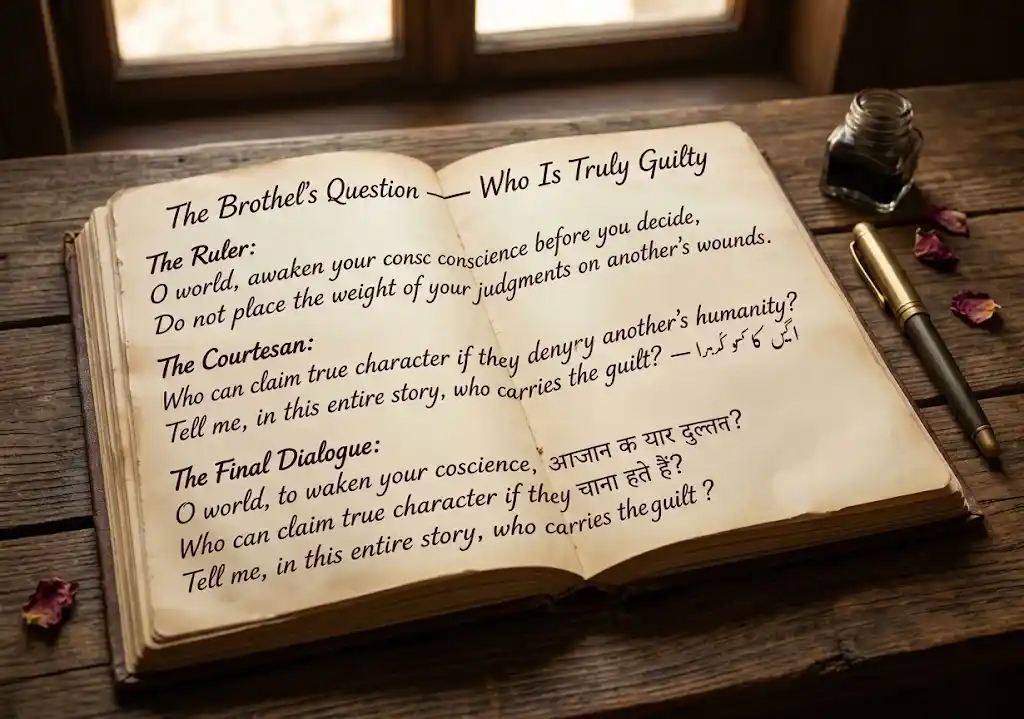
The Final Dialogue:
Neither my brothel nor your palace can testify,
A person’s deeds reveal the truth that words may deny.
Who claims honor while treating the helpless with disdain?
Who understands another’s sorrow, yet refuses to change?
O world, awaken your conscience before you decide,
Do not place the weight of your judgments on another’s wounds.
Who can claim true character if they deny another’s humanity?
Tell me, in this entire story, who carries the guilt?
Read More: Best Poetry When Hearts Speak the Language of Feelings
Bint Ahmad
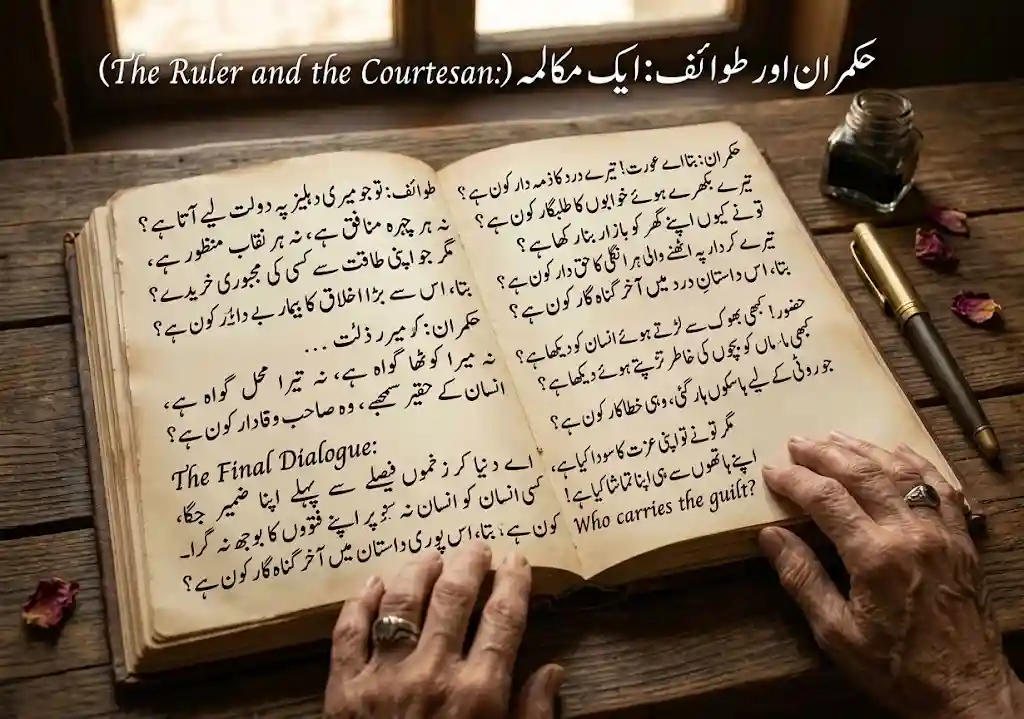
ایک طوائف اور حکمران کی بحث
حکمران:
بتا اے عورت! تیرے درد کا ذمہ دار کون ہے؟
تیرے بکھرے ہوئے خوابوں کا طلبگار کون ہے؟
تو نے کیوں اپنے گھر کو بازار بنا رکھا ہے؟
تیری عزت کو سرِعام کیوں سجا رکھا ہے؟
تیرے کردار پہ اٹھنے والی ہر انگلی کا حق دار کون ہے؟
بتا، اس داستانِ درد میں آخر گناہ گار کون ہے؟
طوائف:
حضور! کبھی بھوک سے لڑتے ہوئے انسان کو دیکھا ہے؟
کبھی ماں کو بچوں کی خاطر تڑپتے ہوئے دیکھا ہے؟
جو روٹی کے لیے اپنا سکون ہار گئی، اس کا قصور کون ہے؟
جو حالات کے ہاتھوں مجبور ہوئی، وہی خطاکار کون ہے؟
حکمران:
مگر تو نے تو اپنی عزت کا سودا کیا ہے،
اپنے ہاتھوں سے ہی اپنا تماشا کیا ہے!
طوائف:
تو جو میری دہلیز پہ دولت لیے آتا ہے،
اپنے چہرے پہ شرافت کا نقاب سجاتا ہے،
میرے کردار پہ انگلی اٹھانے کا حق دار کون ہے؟
بتا، میرے در پہ آنے والا شرمسار کون ہے؟
میں نے بھوک کے ہاتھوں اپنے خواب گنوائے ہیں،
تم نے شوق کی خاطر کتنے گھر بھلائے ہیں؟
میری مجبوری کو خریدنے کا طلبگار کون ہے؟
میرے دامن کو داغ کہنے والا بے داغ کون ہے؟
حکمران:
تو کیا میری دولت ہی میرا گناہ ہے؟
کیا ہر امیر کے دامن پر سیاہ ہے؟
طوائف:
نہ ہر امیر برا ہے، نہ ہر غریب بے قصور ہے،
نہ ہر چہرہ منافق ہے، نہ ہر الزام منظور ہے۔
مگر جو اپنی طاقت سے کسی کی مجبوری خریدے،
بتا، اس سے بڑا اخلاق کا بیمار کون ہے؟
میں نے غربت میں اپنے آنسو چھپائے ہیں،
تم نے آسائشوں میں کتنے چہرے بھلائے ہیں؟
میری کہانی سن کر مجھے رسوا کرنے والا کون ہے؟
میرے زخموں کو تماشا سمجھنے والا کون ہے؟
آخری مکالمہ:
نہ میرا کوٹھا گواہ ہے، نہ تیرا محل گواہ ہے،
انسان کے کردار کا تو اس کا عمل گواہ ہے۔
جو مجبور کو حقیر سمجھے، وہ صاحبِ وقار کون ہے؟
جو درد سمجھ کر بھی نہ بدلے، وہ وفادار کون ہے؟
اے دنیا! فیصلے سے پہلے اپنا ضمیر جگا،
کسی کے زخموں پر اپنے فتووں کا بوجھ نہ گرا۔
جو انسان کو انسان نہ سمجھے، وہ باکردار کون ہے؟
بتا، اس پوری داستان میں آخر گناہ گار کون ہے؟
بنتِ احمد
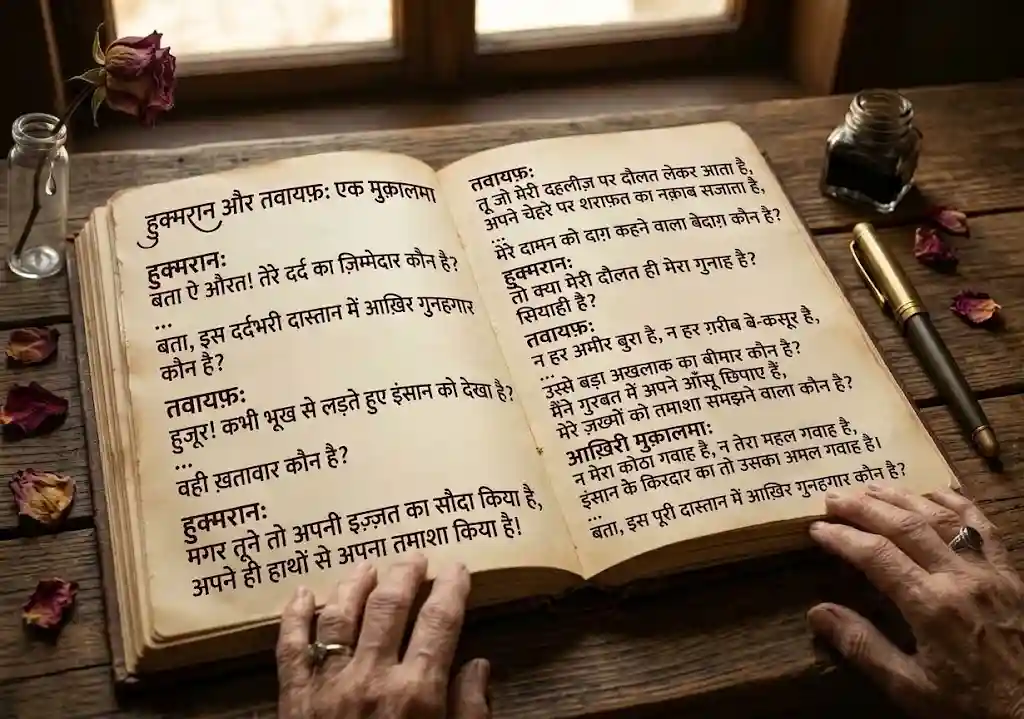
एक तवायफ़ और हुक्मरान की बहस
हुक्मरान:
बता ऐ औरत! तेरे दर्द का ज़िम्मेदार कौन है?
तेरे बिखरे हुए ख़्वाबों का तलबगार कौन है?
तूने अपने घर को बाज़ार क्यों बना रखा है?
अपनी इज़्ज़त को सरेआम क्यों सजा रखा है?
तेरे किरदार पर उँगली उठाने का हक़दार कौन है?
बता, इस दर्दभरी दास्तान में आख़िर गुनहगार कौन है?
तवायफ़:
हुज़ूर! कभी भूख से लड़ते हुए इंसान को देखा है?
कभी माँ को बच्चों की ख़ातिर तड़पते हुए देखा है?
जो रोटी के लिए अपना सुकून हार गई, उसका कसूर कौन है?
जो हालात के हाथों मजबूर हुई, वही ख़तावार कौन है?
हुक्मरान:
मगर तूने तो अपनी इज़्ज़त का सौदा किया है,
अपने ही हाथों से अपना तमाशा किया है!
तवायफ़:
तू जो मेरी दहलीज़ पर दौलत लेकर आता है,
अपने चेहरे पर शराफ़त का नक़ाब सजाता है,
मेरे किरदार पर उँगली उठाने का हक़दार कौन है?
बता, मेरे दर पर आने वाला शर्मसार कौन है?
मैंने भूख के हाथों अपने ख़्वाब गँवाए हैं,
तुमने शौक़ की ख़ातिर कितने घर भुलाए हैं?
मेरी मजबूरी को ख़रीदने का तलबगार कौन है?
मेरे दामन को दाग़ कहने वाला बेदाग़ कौन है?
हुक्मरान:
तो क्या मेरी दौलत ही मेरा गुनाह है?
क्या हर अमीर के दामन पर सियाही है?
तवायफ़:
न हर अमीर बुरा है, न हर ग़रीब बे-क़सूर है,
न हर चेहरा मुनाफ़िक़ है, न हर इल्ज़ाम मंज़ूर है।
मगर जो अपनी ताक़त से किसी की मजबूरी ख़रीदे,
बता, उससे बड़ा अख़लाक़ का बीमार कौन है?
मैंने ग़ुरबत में अपने आँसू छिपाए हैं,
तुमने ऐशो-आराम में कितने चेहरे भुलाए हैं?
मेरी कहानी सुनकर मुझे रुसवा करने वाला कौन है?
मेरे ज़ख़्मों को तमाशा समझने वाला कौन है?
आख़िरी मुक़ालमा:
न मेरा कोठा गवाह है, न तेरा महल गवाह है,
इंसान के किरदार का तो उसका अमल गवाह है।
जो मजबूर को हक़ीर समझे, वो साहिब-ए-वक़ार कौन है?
जो दर्द समझकर भी न बदले, वो वफ़ादार कौन है?
ऐ दुनिया! फ़ैसले से पहले अपना ज़मीर जगा,
किसी के ज़ख़्मों पर अपने फ़तवों का बोझ न गिरा।
जो इंसान को इंसान न समझे, वो बाकिरदार कौन है?
बता, इस पूरी दास्तान में आख़िर गुनहगार कौन है?
बिन्त-ए-अहमद
A Tale of Poverty, Power, and Humanity
A debate between a courtesan and a ruler reveals the harsh realities of society. It tells the story of a woman struggling with poverty, helplessness, and difficult circumstances. On the other side stands a ruler who represents wealth, power, and authority. When he questions her character, she challenges him to examine his own intentions and behavior. Their conversation encourages readers to think before judging someone whose struggles they do not understand. This poetry is not about blaming one social class or declaring one person entirely guilty. Instead, it explores humanity, compassion, justice, and society’s double standards. Through their powerful dialogue, the poem asks an important question: should people be judged by their circumstances, their choices, or the way they treat others?
Pingback: Best Poetry: When Love Comes Bearing Bangles